


 日本語
 Español
 Deutsch
 عربى
Outdoor landscaping is not only about choosing attractive plants. The size, placement, and appearance of containers also influence how an entrance, driveway, garden path, or commercial frontage is perceived. Large planters can establish visual balance, fill awkward corners, and create a clear transition between buildings and outdoor areas. For landscape contractors, property managers, and wholesale buyers sourcing Sandblasting Flower Pots, the challenge is to select containers that combine decorative appeal with practical requirements such as plant growth, weather exposure, handling, and long-term maintenance.
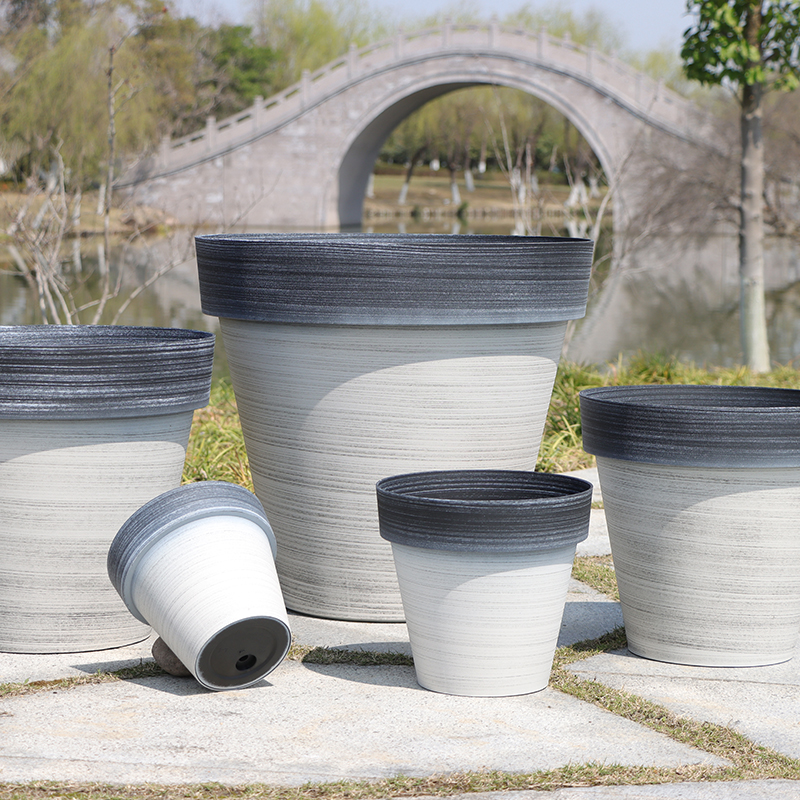
Use Large Planters to Define Outdoor Spaces
Large flowerpots are prominent landscape elements, so their placement deserves careful planning. A pair of matching planters on either side of an entrance can create a balanced appearance, while containers positioned beside steps can help frame the approach to a building. Along a driveway, repeated planters may establish visual rhythm without requiring permanent landscaping changes.
However, symmetry is not always necessary. An irregular corner or broad paved area may benefit from a single large planter or a small group of containers arranged at different heights. Buyers should consider the surrounding architecture, available walking space, and plant proportions before deciding on the size and number of planters.
Choose Container Size According to Plant Requirements
A large planter provides more room for roots than a small desktop pot, but container size should match the selected plant rather than appearance alone. Root depth, mature plant size, watering frequency, and growing conditions all affect the choice.
A larger volume of growing medium can help retain moisture and nutrients and may reduce rapid changes in root-zone temperature and moisture. These benefits depend on the potting medium, drainage, exposure, and watering practices. A large container does not automatically guarantee healthier plants, so buyers should consider the complete planting arrangement when specifying outdoor planters.
Plan for Drainage and Outdoor Exposure
Outdoor containers face changing weather conditions, including rain, direct sunlight, and seasonal temperature fluctuations. Without suitable drainage, excess water may accumulate around plant roots. On the other hand, containers exposed to hot, dry conditions may require more frequent watering.
Before selecting large outdoor plastic flower pots, buyers should check whether the design supports the intended planting method and whether drainage openings or an inner pot are needed. The container material and finish should also be suitable for the expected environment. These details are especially important for commercial landscapes, where replacing poorly matched products can create additional labor.
Balance Visual Impact With Practical Placement
A large planter can fill an empty corner, but its dimensions and position should not obstruct pedestrian routes, doors, ramps, or maintenance access. This matters at hotel entrances, office buildings, retail storefronts, and residential developments where planters must work alongside everyday movement.
Useful planning considerations include:
- Available floor space and clearance around entrances
- The mature height and spread of the selected plants
- The visual relationship between planters and nearby architectural features
- Access for watering, pruning, and routine cleaning
- The weight of the container after it has been filled
Considering these factors before installation helps landscape teams create an attractive arrangement without making the area difficult to use.
Evaluate Materials, Finish, and Handling
Plastic planters can be considered for projects where manageable handling and flexible placement are important. Nevertheless, buyers should assess the actual product construction, dimensions, finish, and suitability for outdoor exposure rather than assuming all plastic containers perform alike.
For Sandblasting Flower Pots, the surface appearance is another purchasing consideration. Buyers should confirm the intended texture, color consistency, and finish requirements with the manufacturer. For larger containers, packaging and handling also deserve attention because the product's dimensions can affect storage, transportation, and installation planning.
Make Bulk Purchasing Easier With Clear Specifications
Landscape projects often require multiple containers with a consistent appearance. Differences in size, color, or surface finish can become noticeable when products are installed together, particularly at symmetrical entrances or along a shared walkway.
Before placing a bulk order, buyers should confirm the required dimensions, color, finish, quantity, packaging method, and intended application. Reviewing a sample and agreeing on product specifications can help align expectations before production. It is also useful to clarify whether the same design will be needed for future project phases or repeat orders.
Work With a Manufacturer on Project Requirements
Taizhou Shengerda Plastic Co., Ltd. offers a manufacturer-based point of contact for buyers evaluating plastic flowerpots for decorative and landscaping applications. When discussing large outdoor plastic flower pots, procurement teams can explain the installation environment, desired appearance, plant requirements, and order specifications to help determine whether a product is suitable for the project.
By evaluating placement, drainage, surface finish, container dimensions, and handling requirements together, buyers can make more informed decisions when sourcing Sandblasting Flower Pots. The result is a planter selection that supports both the intended landscape design and the practical demands of outdoor use.

