


 日本語
日本語 Español
 Deutsch
 عربى
عربىLiving spaces today are increasingly defined by flexibility. Homes serve not only as places of rest but also as work environments, social settings, and personal retreats. Within this context, decorative objects are expected to deliver more than visual appeal. As a Plastic Flower Pot, the TB-03 Unique Delicate Rattan Flower Pot is designed to respond to changing lifestyle needs by considering how structural form and material selection affect daily use, spatial coordination, and long-term adaptability.Rather than focusing solely on ornamentation, this planter demonstrates how thoughtful form and surface treatment can support changing interior and exterior needs without overwhelming the surrounding environment.
Structured Form As A Foundation For Visual Balance
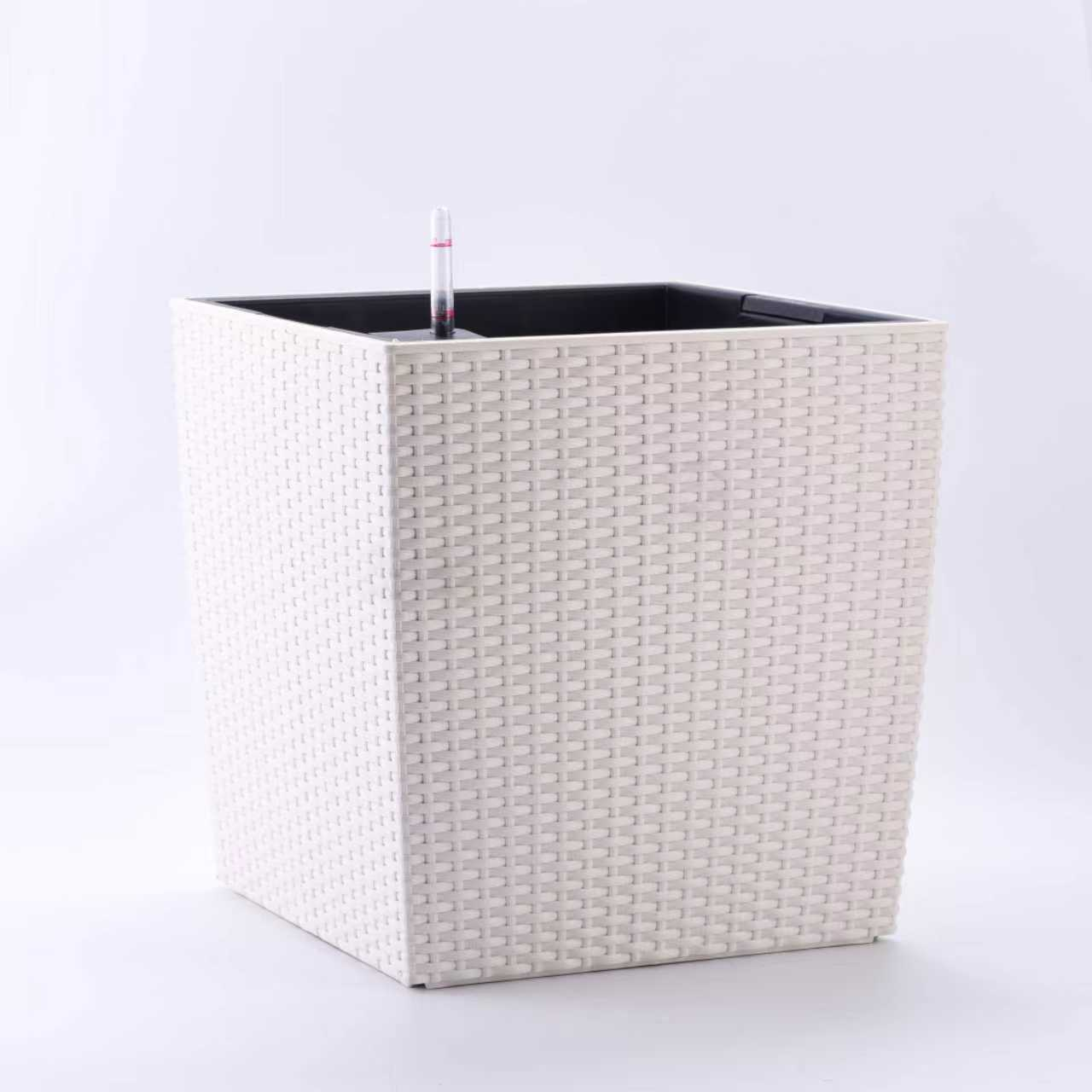
One defining characteristic of the TB-03 Unique Delicate Rattan Flower Pot is its rectangular silhouette. This structured geometry offers practical advantages in modern spaces where alignment and proportion play a significant role. Rectangular planters sit naturally against walls, alongside furniture, or within narrow walkways, making them suitable for apartments, offices, balconies, and commercial interiors.
The balanced proportions help anchor visual compositions. In rooms filled with soft furnishings, curved seating, or layered textiles, the planter’s clean lines introduce a sense of order. Conversely, in minimalist environments, its subtle surface texture prevents the space from feeling overly rigid. This balance allows the planter to function as a stabilizing element rather than a competing focal point.
Textured Surfaces And Their Impact On Perceived Warmth
Although categorized as a Plastic Flower Pot, the woven rattan-inspired exterior alters how the material is perceived. Texture plays a psychological role in design, often influencing how welcoming or comfortable a space feels. The tactile surface of this planter softens its structured outline, adding depth without visual clutter.
This quality becomes particularly relevant in contemporary interiors dominated by smooth finishes such as glass, metal, or polished stone. Introducing textured planters helps break uniformity, making plant displays feel more organic. The surface detail also interacts with natural and artificial light, creating subtle shadows that enhance visual interest throughout the day.
Adapting To Indoor And Outdoor Living Transitions
Modern lifestyles increasingly blur the boundary between indoor and outdoor spaces. The TB-03 Unique Delicate Rattan Flower Pot supports this transition through its lightweight construction and durable plastic body. Moving plants between a sunlit patio and an interior living area does not require heavy lifting or specialized handling.
For users who adjust layouts seasonally or reorganize spaces frequently, this adaptability becomes a practical advantage. The water-resistant inner surface simplifies maintenance, while the planter’s stability supports taller plants that might otherwise require additional reinforcement. These features allow users to focus on plant care rather than container limitations.
Supporting Healthy Growth Without Complicating Care
Design versatility extends beyond appearance to functional performance. The spacious interior of this Rattan Flower Pot accommodates a variety of plant types, from shallow-rooted succulents to more established foliage with broader root systems. Adequate internal space reduces the need for frequent repotting, which can stress plants if done too often.
The smooth interior surface assists with drainage management and cleaning, helping prevent residue buildup over time. This characteristic is particularly useful for users balancing busy schedules with plant care, as it reduces maintenance complexity without compromising plant health.
Practical Use Across Residential And Commercial Settings
The neutral design language of the TB-03 planter allows it to integrate seamlessly into diverse environments. In residential spaces, it can define corners, frame windows, or divide open-plan areas without adding visual weight. In commercial settings such as cafes, offices, or hospitality interiors, multiple units can be arranged in linear or staggered configurations to guide movement or soften architectural lines.
Its consistent form supports cohesive visual planning, especially when designers aim to maintain continuity across different zones. Whether used individually or in grouped arrangements, the planter adapts to both intimate and larger-scale layouts.
Long-Term Visual Consistency And Material Stability
Durability often determines whether a decorative item remains relevant over time. As a Plastic Flower Pot, the TB-03 is designed to resist common issues such as moisture exposure, surface staining, and color fading associated with regular use. This stability helps maintain a consistent appearance even as surrounding décor evolves.
Users investing in planters for long-term projects, such as indoor greenery programs or outdoor landscaping features, benefit from products that age predictably. Rather than drawing attention to wear, the planter maintains its role as a supporting element, allowing plants to remain the central visual focus.
Integrating Design With Everyday Living
The TB-03 Unique Delicate Rattan Flower Pot illustrates how structured design, textured surfaces, and functional considerations can coexist within a single product. By responding to real living scenarios—space limitations, maintenance needs, and changing aesthetics—it offers users a practical tool for shaping environments that feel both organized and inviting.
As plant-centered interiors continue to influence residential and commercial design, containers that adapt quietly to their surroundings become increasingly relevant. This planter supports that approach by aligning form, material, and usability with the rhythms of modern life, allowing spaces to evolve naturally alongside the people and plants within them.

