


 日本語
日本語 Español
 Deutsch
 عربى
عربىAcross garden centers, landscaping projects, and hospitality outdoor spaces, procurement teams are asking the same question this season: why do so many planters crack after one winter or fade within a single summer? As sourcing managers compare suppliers ahead of Q4 restocking, a colorful flower pot that actually survives freeze-thaw cycles and prolonged UV exposure has become less of a nice-to-have and more of a baseline requirement. This shift in buyer expectations is reshaping how manufacturers approach material selection, structural design, and finish durability.
What's Driving the Demand Shift Overseas
Recent conversations across gardening forums and trade groups point to a recurring frustration: planters purchased for outdoor commercial landscaping or residential patios often degrade well before their expected lifespan. Buyers in colder climates report cracking after a single frost, while those in sun-intensive regions describe chalking and color loss within months. This has pushed procurement teams to prioritize technical specifications—frost tolerance, UV stabilization, wall thickness—over surface appearance alone.
Design That Solves a Handling Problem
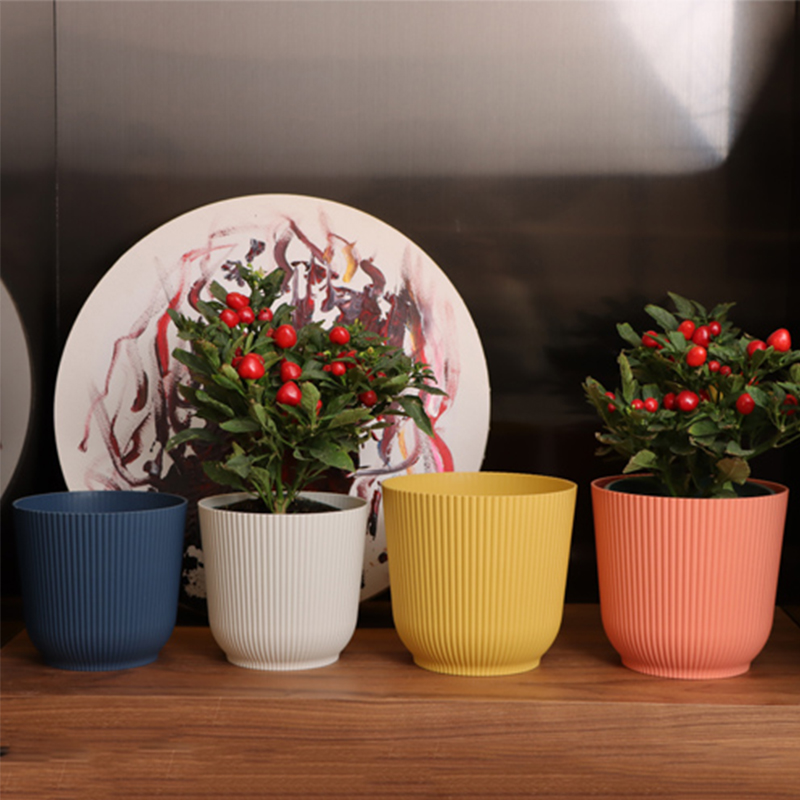
One recurring complaint from engineers and landscaping crews involves handling large planters on job sites, especially when surfaces are wet or gloves are worn. A ribbed exterior addresses this directly, offering a tactile, slip-resistant grip that improves stability during transport and placement on uneven ground. Above the ribbing, a smooth upper rim provides visual contrast, giving the piece a clean, purposeful look that fits both modern and traditional landscaping schemes.
Structural Practicality for Real Planting Conditions
A cylindrical form isn't just an aesthetic choice—it directly affects planting versatility. This shape accommodates compact succulents, herb gardens, and larger flowering species without requiring multiple container types. Adequate depth supports root development, straight sidewalls simplify soil handling, and a smooth interior surface reduces residue buildup, which matters for growers managing frequent transplanting cycles.
Built for Climate Extremes, Not Just Mild Weather
Weather resilience is where many standard pots fall short. A properly engineered frostproof and UV-resistant construction is designed to hold up where lower-grade materials typically fail:
- Resists cracking during repeated freeze-thaw cycles
- Maintains color stability under sustained sun exposure
- Retains structural integrity without becoming brittle over time
- Reduces long-term replacement costs for commercial landscaping accounts
These are the exact performance points buyers are now requesting in RFQs, rather than relying on general "outdoor-rated" claims.
Everyday Usability Buyers Often Overlook
Beyond weather performance, practical details influence purchasing decisions. Balanced weight distribution helps prevent tipping in windy conditions, while an ergonomic profile makes relocation manageable for maintenance staff. Whether paired with pebbles, trailing vines, or a single statement plant, the neutral yet distinctive silhouette adapts easily to varied landscaping concepts.
Who Is Actually Buying This Category Right Now
Urban gardening suppliers, hospitality groundskeepers, and residential design retailers represent the core buyer segments driving current inquiries. Many are placing orders in matched sets for cohesive indoor displays or mixing sizes for layered outdoor arrangements, reflecting a broader trend toward curated, low-maintenance greenery.
Long-Term Value Over Frequent Replacement
Maintenance remains simple—routine rinsing restores appearance, and there's no need for frequent replacement cycles common with lower-grade materials. As a manufacturer producing the TW-01/02/03/04 series, we've built these units around durability-first engineering rather than short-term aesthetics.
For buyers evaluating suppliers this quarter, a colorful flower pot engineered for real climate conditions offers a more dependable path than options chosen on appearance alone.

