


 日本語
日本語 Español
 Deutsch
 عربى
عربىRather than drawing attention through color or ornamentation, modern interior products increasingly rely on surface texture to communicate quality and restraint. In this context, the Plastic Flower Pot with a gypsum-like finish demonstrates how material treatment can shape both visual perception and everyday usability. The Modern Square Gypsum-Like Textured Plastic Flower Pot introduces a soft off-white tone combined with a matte, mineral-inspired surface, offering an alternative to glossy plastics or fragile ceramic containers. This design direction responds to practical concerns often raised by users seeking decorative planters that align with contemporary interiors while remaining suitable for repeated daily use.
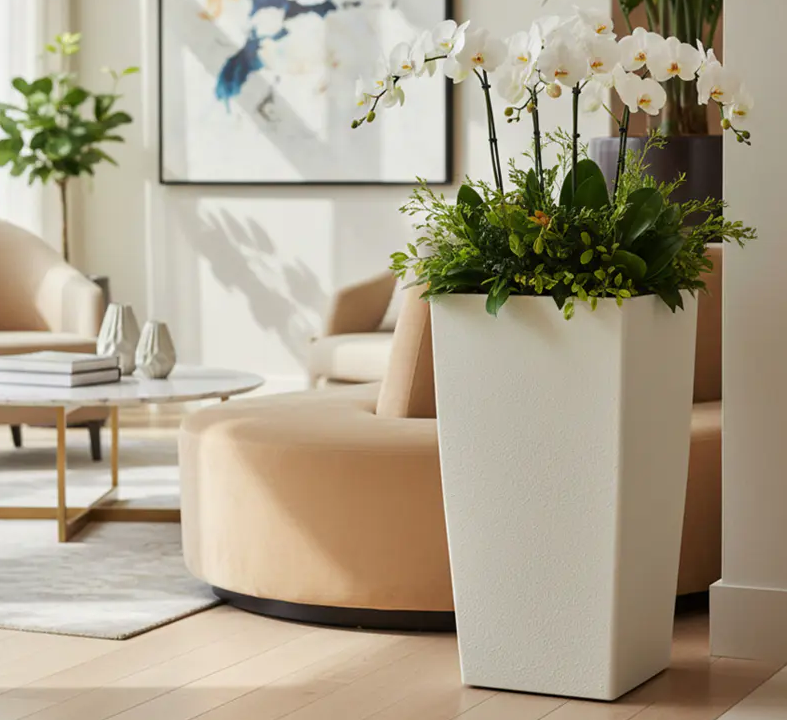
Understanding Gypsum-Like Texture In Plastic Planters
Gypsum-inspired textures are known for their subtle grain and diffused light reflection. When applied to plastic through advanced surface molding and finishing techniques, this texture changes how the planter interacts with its surroundings. Instead of reflecting light sharply, the surface absorbs and softens it, reducing glare in bright rooms and maintaining visual consistency under artificial lighting.
From a practical perspective, this texture also helps reduce the visibility of fingerprints, minor dust accumulation, and light surface scratches that can appear during repositioning or routine cleaning. For users managing indoor plants in offices, retail displays, or shared residential spaces, this characteristic reduces the frequency of maintenance needed to keep the planter presentable.
Square Form And Tapered Structure As Functional Design
The tall square silhouette is not only a stylistic choice but also a functional one. Square planters offer predictable spatial efficiency, fitting neatly into corners, beside furniture, or along walls without disrupting circulation paths. The gently tapered profile enhances stability by distributing weight toward the base while maintaining a refined vertical line.
This structural approach supports plants such as fiddle-leaf figs, orchids, and other upright greenery that benefit from balanced root support. Users often question whether decorative plastic planters can safely accommodate taller plants without tipping or warping. In this case, the combination of internal volume, wall thickness, and weighted construction addresses those concerns in a measurable way.
Perceived Weight And Its Role In User Confidence
Although made from plastic, the planter's substantial feel plays an important role in user perception. Weight is often associated with durability and quality, particularly when compared with thin-walled plastic containers commonly used for temporary planting. By incorporating reinforced material density, this planter offers a reassuring sense of solidity when lifted or repositioned.
This feature is especially relevant in commercial environments such as showrooms, hotel lobbies, and office reception areas, where planters may be moved during cleaning or layout adjustments. A heavier, well-balanced planter reduces accidental tipping and helps maintain plant alignment over time.
Indoor And Sheltered Outdoor Compatibility
One frequent question from buyers involves whether textured decorative planters can transition between indoor and outdoor use. This product is designed for interior spaces and sheltered outdoor areas such as covered balconies, patios, or entranceways. The plastic construction resists moisture absorption, reducing the risk of cracking or flaking associated with porous mineral-based materials.
At the same time, the gypsum-like finish maintains its appearance under moderate exposure, provided it is not subjected to prolonged direct sunlight or bad weather. This makes it suitable for users who want visual continuity between indoor living areas and semi-outdoor spaces without managing multiple planter styles.
Integration With Modern Living And Work Environments
In residential settings, the neutral off-white tone allows the planter to blend with various color palettes, from warm wood interiors to concrete or metal accents. It acts as a supporting element rather than a focal distraction, allowing plants to remain the primary visual feature.
In professional environments, such as offices or commercial display areas, the clean geometry and restrained texture contribute to a sense of order. Designers and facility managers often seek planters that reinforce spatial structure without adding visual clutter. The square profile and muted surface help achieve this balance while still providing a tactile, human-centered element.

