


 日本語
日本語 Español
 Deutsch
 عربى
عربىA quiet shift in interior styling often begins with small objects that subtly change how a space feels. The Diamond Pattern Sandblasting Plastic Flower Pot is increasingly used in home environments where visual balance, surface detail, and plant presentation are considered together rather than separately. Instead of acting as a simple container, this type of flower pot contributes to how greenery is perceived within indoor spaces, especially when paired with different furniture materials and lighting conditions.
Surface Texture and Material Interaction in Daily Use
The sandblasted finishing process gives the plastic surface a controlled matte texture. Unlike high-gloss finishes that reflect light sharply, this surface diffuses light gently, which reduces visual distraction in compact rooms or areas with strong artificial lighting. The tactile feel is slightly granular but remains smooth enough for daily handling, making it suitable for repositioning or routine plant care.
In practical use, this type of surface also reduces the visibility of fingerprints and minor smudges. This is particularly useful in homes where flower pots are frequently moved between shelves, desks, or window ledges. Over time, glossy plastic containers tend to show handling marks more clearly, while sandblasted textures maintain a more consistent appearance with minimal maintenance effort.
Visual Balance Through Two-Tone Design
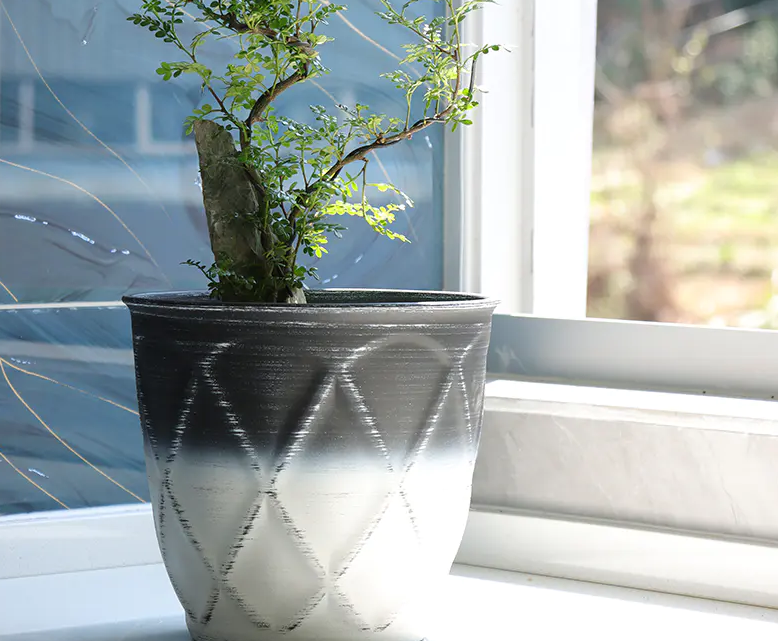
Another noticeable feature of the Diamond Pattern Round Indoor Decorative Flower Pot is its two-color composition. The diamond pattern structure adds subtle depth to the surface, allowing light and shadow to interact gently depending on viewing angle and room illumination. This creates a layered visual effect without overwhelming the surrounding décor.
The two-tone design also helps the pot integrate into different interior settings. In Nordic-inspired spaces, where neutral palettes dominate, the pot introduces a controlled contrast without disrupting the calm atmosphere. In modern minimalist interiors, it provides texture that prevents the space from appearing too flat or uniform. Even in more decorative environments, it can act as a stabilizing visual element that connects various design components.
Role in Enhancing Indoor Plant Presentation
Indoor plants often rely on containers to define their visual identity within a room. The matte sandblasted surface of the flower pot allows green tones from plants to stand out more naturally, without competing reflections or glossy interference. This helps highlight leaf structure, color variation, and overall plant shape.
When placed near natural light sources such as windows, the pot does not create harsh reflections that might distract from the plant itself. Instead, it supports a softer visual transition between plant, container, and surrounding environment. This is particularly useful for medium-sized leafy plants or compact decorative plants commonly used in living rooms, bedrooms, and office spaces.
Functional Use in Different Indoor Spaces
In living rooms, these flower pots are often placed beside sofas, TV cabinets, or corner shelves to introduce organic elements into structured furniture layouts. The rounded shape softens angular furniture lines, while the diamond pattern adds subtle surface interest.
In workspaces or home offices, they can be used to hold small desk plants, contributing to a more visually comfortable working environment. The neutral texture prevents distraction while still offering a natural visual break from screens and documents.
In bedrooms, they are often used as bedside decorative elements. The matte surface interacts gently with low lighting conditions, maintaining a calm visual presence that does not feel intrusive at night.
Practical Value in Everyday Home Arrangement
Beyond aesthetics, indoor flower pots also play a functional role in spatial organization. They can be used to visually balance empty wall areas, shelf gaps, or corners that feel incomplete. When positioned thoughtfully, they help distribute visual weight across a room.
In some cases, they are also used to conceal minor wall or surface imperfections when placed strategically with plants. This makes them a flexible decorative tool for renters or homeowners who prefer non-permanent interior adjustments.
Material Considerations and Maintenance Behavior
Plastic-based sandblasted flower pots are generally lightweight, which makes them easier to reposition compared to ceramic or stone alternatives. This is especially useful in seasonal rearrangements or when adjusting plant exposure to light.
Cleaning is typically straightforward. A damp cloth is usually sufficient to remove dust accumulation from the textured surface. Because of the matte finish, minor dust particles are less visually prominent compared to glossy materials, which helps maintain a cleaner appearance over time without frequent deep cleaning.
FAQ
Q1: Does the sandblasted surface affect plant health?
No, the surface finish only applies to the exterior texture. It does not affect drainage, soil conditions, or plant growth.
Q2: Is the flower pot suitable for both small and medium plants?
Yes, it can be used for a range of indoor plants, including small desk plants and medium decorative greenery, depending on size selection.
Q3: Will the color fade over time under sunlight?
The material is designed for indoor use, and normal indirect sunlight exposure typically does not cause noticeable fading in short to medium-term use.
Q4: Can it be used in office environments?
Yes, its neutral texture and balanced design make it suitable for office desks, meeting rooms, and reception areas.
Q5: How does it compare to glossy flower pots in maintenance?
Matte sandblasted surfaces tend to show fewer fingerprints and smudges, reducing the need for frequent cleaning compared to glossy finishes.

